<?xml version="1.0" encoding="UTF-8"?>
<!--Generated by Squarespace V5 Site Server v5.13.156 (http://www.squarespace.com) on Mon, 20 May 2013 05:05:39 GMT--><feed xmlns="http://www.w3.org/2005/Atom" xmlns:dc="http://purl.org/dc/elements/1.1/"><title>Astrodreamer</title><subtitle>Astrodreamer</subtitle><id>http://astrodreamer.squarespace.com/blog/</id><link rel="alternate" type="application/xhtml+xml" href="http://astrodreamer.squarespace.com/blog/"/><link rel="self" type="application/atom+xml" href="http://astrodreamer.squarespace.com/blog/atom.xml"/><updated>2013-03-31T03:14:42Z</updated><generator uri="http://five.squarespace.com/" version="Squarespace V5 Site Server v5.13.156 (http://www.squarespace.com)">Squarespace</generator><entry><title>A Ramble with Aries Philosopher</title><id>http://astrodreamer.squarespace.com/blog/2012/10/10/a-ramble-with-aries-philosopher.html</id><link rel="alternate" type="text/html" href="http://astrodreamer.squarespace.com/blog/2012/10/10/a-ramble-with-aries-philosopher.html"/><author><name>Mark Shulgasser</name></author><published>2012-10-10T22:09:41Z</published><updated>2012-10-10T22:09:41Z</updated><content type="html" xml:lang="en-US"><![CDATA[<p><a href="http://astrodreamer.squarespace.com/blog/2011/8/24/a-ramble-with-aries-philosophers.html">http://astrodreamer.squarespace.com/blog/2011/8/24/a-ramble-with-aries-philosophers.html</a></p>
<p> <span class="full-image-block ssNonEditable"><span><img src="http://astrodreamer.squarespace.com/storage/descartes.jpg?__SQUARESPACE_CACHEVERSION=1349907349507" alt="" /></span></span></p>]]></content></entry><entry><title>Red Aries #38</title><category term="Aries"/><category term="Bette Davis"/><category term="Marc Jacobs"/><category term="aries"/><category term="astrology"/><category term="horoscope"/><category term="red"/><id>http://astrodreamer.squarespace.com/blog/2012/4/10/red-aries-38.html</id><link rel="alternate" type="text/html" href="http://astrodreamer.squarespace.com/blog/2012/4/10/red-aries-38.html"/><author><name>Mark Shulgasser</name></author><published>2012-04-10T19:50:24Z</published><updated>2012-04-10T19:50:24Z</updated><content type="html" xml:lang="en-US"><![CDATA[<p><span class="full-image-block ssNonEditable"><span><img src="http://astrodreamer.squarespace.com/storage/davis red.jpg" alt="" /></span></span></p>
<p>Bette Davis, 5 April 1908</p>
<p><span class="full-image-block ssNonEditable"><span><img src="http://astrodreamer.squarespace.com/storage/marc jacobs.jpg?__SQUARESPACE_CACHEVERSION=1334087630840" alt="" /></span></span>Marc Jacobs, 9 April 1963</p>]]></content></entry><entry><title>Red Aries #37: Lips</title><category term="Aries"/><category term="Heath Ledger"/><category term="James France"/><category term="Tim Curry"/><category term="aries"/><category term="astrology"/><category term="horoscope"/><category term="marcel marceau"/><id>http://astrodreamer.squarespace.com/blog/2012/4/10/red-aries-37-lips.html</id><link rel="alternate" type="text/html" href="http://astrodreamer.squarespace.com/blog/2012/4/10/red-aries-37-lips.html"/><author><name>Mark Shulgasser</name></author><published>2012-04-10T14:30:16Z</published><updated>2012-04-10T14:30:16Z</updated><content type="html" xml:lang="en-US"><![CDATA[<p><span class="full-image-block ssNonEditable"><span><img style="width: 250px;" src="http://astrodreamer.squarespace.com/storage/jamesfranco2.jpg" alt="" /></span></span>James Franco, 19 April 1978</p>
<p><span class="full-image-block ssNonEditable"><span><img src="http://astrodreamer.squarespace.com/storage/lgfp1999tim-curry-as-dr-frank-n-furter-the-rocky-horror-picture-show-poster.jpg?__SQUARESPACE_CACHEVERSION=1334068793029" alt="" /></span></span>Tim Curry, 19 April 1946</p>
<p><span class="full-image-block ssNonEditable"><span><img src="http://astrodreamer.squarespace.com/storage/heathl.jpg?__SQUARESPACE_CACHEVERSION=1334091840008" alt="" /></span></span></p>
<p>Heath Ledger, 4 April 1979</p>
<p><span class="full-image-block ssNonEditable"><span><img src="http://astrodreamer.squarespace.com/storage/marcel.jpg?__SQUARESPACE_CACHEVERSION=1334069412907" alt="" /></span></span>Marcel Marceau, 22 March 1923</p>]]></content></entry><entry><title>Red Aries #36: Francisco Goya</title><category term="Aries"/><category term="Goya"/><category term="aries"/><category term="astrology"/><category term="horoscope"/><id>http://astrodreamer.squarespace.com/blog/2012/4/2/red-aries-36-francisco-goya.html</id><link rel="alternate" type="text/html" href="http://astrodreamer.squarespace.com/blog/2012/4/2/red-aries-36-francisco-goya.html"/><author><name>Mark Shulgasser</name></author><published>2012-04-03T01:31:53Z</published><updated>2012-04-03T01:31:53Z</updated><content type="html" xml:lang="en-US"><![CDATA[<p><span class="full-image-block ssNonEditable"><span><img src="http://astrodreamer.squarespace.com/storage/Picture-8.jpg" alt="" /></span></span></p>
<p>Another great court portraitist, (like Anthony VanDyck, Red Aries #18), Francisco Goya, born on March 30, 1746, had a penchant for bright red, especially as an accent: <span style="color: black;">red cape, red ribbon, red collar, red corsage, red boutonniere, red cuff, feather, box, flag, flame, hat, pants, ember, blood. He painted the Duchess of Alba twice, once in a white dress and once in a black one, each with a red sash. The painting above, Goya's most beloved, unites the color with his favorite theme, childhood. At the lower left, his frequent touch of the macabre, the three cats ready to pounce on the bird.</span></p>
<p><span style="color: black;"><span class="full-image-float-left ssNonEditable"><span><img src="http://astrodreamer.squarespace.com/storage/goya hat.jpg" alt="" /></span></span></span></p>
<p><span style="color: black;">Here he equates the Aries bodypart, the head, and the Aries color.</span></p>
<p><span style="color: black;"><span class="full-image-block ssNonEditable"><span><img src="http://astrodreamer.squarespace.com/storage/goyafloridablanca.jpg?__SQUARESPACE_CACHEVERSION=1333638205387" alt="" /></span></span></span></p>
<p><span style="color: black;">The haunting portrait of Count Floridablanca is profound meditation on identity. The ostensible Subject is the central figure in bold red, but his existence is diffused, appearing also in his oval portrait dimly looming above him. There is also a self-portrait of the artist, humbly dressed on the left, whose profile is 'fortuitously' highlighted, while the individuality of an insignificant secretary seems to have struck the artist as more interesting than the Count, who is comparing his painted image with his image in a mirror. So there are at least six self-images present or implicit. Other important Aries images in Goya's work: Boy on a Ram, The Disasters of War series, The Massacre, and the hacked and bloody butcher's still life, "Head and Quarters":<br /></span></p>
<p><span style="color: black;"><span class="full-image-block ssNonEditable"><span><img style="width: 200px;" src="http://astrodreamer.squarespace.com/storage/Goya-Head-and-Quarters-Pic.jpg?__SQUARESPACE_CACHEVERSION=1333639660634" alt="" /></span></span><br /></span></p>
<p><span style="color: black;"><br /></span></p>
<p><span style="color: black;"><span class="full-image-block ssNonEditable"><span><img src="http://astrodreamer.squarespace.com/storage/Goya-Head-and-Quarters-Pic.jpg?__SQUARESPACE_CACHEVERSION=1333639240139" alt="" width="1" height="1" /></span></span><br /></span></p>]]></content></entry><entry><title>Red Aries #35: Grayson Perry</title><category term="Aries"/><category term="Grayson Perry"/><category term="aries"/><category term="astrology"/><category term="horoscope"/><category term="pottery"/><id>http://astrodreamer.squarespace.com/blog/2012/4/2/red-aries-35-grayson-perry.html</id><link rel="alternate" type="text/html" href="http://astrodreamer.squarespace.com/blog/2012/4/2/red-aries-35-grayson-perry.html"/><author><name>Mark Shulgasser</name></author><published>2012-04-02T16:45:49Z</published><updated>2012-04-02T16:45:49Z</updated><content type="html" xml:lang="en-US"><![CDATA[<p><a href="http://docuwiki.net/index.php?title=Grayson_Perry">Grayson Perry</a> (born 24 March 1960), provocative English artist /perfomer, here in male costume -- note: the Aries sign is a phallus!</p>
<p><span class="full-image-block ssNonEditable"><img src="http://astrodreamer.squarespace.com/storage/graysonperry.jpg" alt="" /></span></p>
<p><span class="Apple-style-span" style="font-size: 10px;"><span class="full-image-block ssNonEditable">&nbsp;</span><span class="full-image-block ssNonEditable"><span class="full-image-block ssNonEditable"><img src="http://astrodreamer.squarespace.com/storage/graysonperry4.jpg" alt="" /></span></span></span></p>
<p><span class="Apple-style-span" style="font-size: 110%;">Red bow!</span></p>
<p><span class="Apple-style-span" style="font-size: 110%;"><span class="full-image-block ssNonEditable"><span><img src="http://astrodreamer.squarespace.com/storage/graysonperry2.jpg?__SQUARESPACE_CACHEVERSION=1333389874476" alt="" /></span></span><br /></span></p>
<p><span class="Apple-style-span" style="font-size: 10px;"> <span class="full-image-block ssNonEditable"><img src="http://astrodreamer.squarespace.com/storage/graysonperry2.jpg alt=" alt="" /></span></span></p>
<p>Red shoes!<a href="http://astrodreamer.squarespace.com/blog/2009/4/11/the-red-shoes-21.html"> (c.f. Aries in Red #21: Hans Christian Andersen)</a></p>
<p><span class="full-image-block ssNonEditable"><img src="http://astrodreamer.squarespace.com/storage/graysonperry3.jpg" alt="" /></span></p>
<p>"Himself"</p>]]></content></entry><entry><title>Red Aries #34: Brenda Starr</title><category term="Aries"/><category term="Brenda Starr"/><category term="Dale Messick"/><category term="astrology"/><category term="fashion"/><category term="zodiac"/><id>http://astrodreamer.squarespace.com/blog/2012/4/1/red-aries-34-brenda-starr.html</id><link rel="alternate" type="text/html" href="http://astrodreamer.squarespace.com/blog/2012/4/1/red-aries-34-brenda-starr.html"/><author><name>Mark Shulgasser</name></author><published>2012-04-01T16:41:08Z</published><updated>2012-04-01T16:41:08Z</updated><content type="html" xml:lang="en-US"><![CDATA[<p><a href="http://en.wikipedia.org/wiki/Brenda_Starr,_Reporter">Brenda Starr</a>, flaming red-head reporter, created by cartoonist <a href="http://en.wikipedia.org/wiki/Dale_Messick">Dale Messick</a>, born April 11, 1906.</p>
<p><span class="full-image-block ssNonEditable"><span><img src="http://astrodreamer.squarespace.com/storage/BrendaStarr_V2_010.jpg" alt="" /></span></span></p>]]></content></entry><entry><title>Red Aries #33: Cynthia Nixon</title><category term="Aries"/><category term="Cynthia Nixon"/><category term="astrology"/><category term="fashion"/><category term="zodiac"/><id>http://astrodreamer.squarespace.com/blog/2012/4/1/red-aries-33-cynthia-nixon.html</id><link rel="alternate" type="text/html" href="http://astrodreamer.squarespace.com/blog/2012/4/1/red-aries-33-cynthia-nixon.html"/><author><name>Mark Shulgasser</name></author><published>2012-04-01T16:23:32Z</published><updated>2012-04-01T16:23:32Z</updated><content type="html" xml:lang="en-US"><![CDATA[<p>Taking a page from<a href="http://astrodreamer.squarespace.com/blog/2010/1/9/lady-gaga-red-aries-32.html"> Lady Gaga's (#32)</a> playbook, Cynthia Nixon (April 9, 1966)&nbsp;in a red leather dress!</p>
<p><span class="full-image-block ssNonEditable"><span><img src="http://astrodreamer.squarespace.com/storage/400px-Cynthia_Nixon_RK.jpg" alt="" /></span></span></p>]]></content></entry><entry><title>Julian Assange: "You share your body with a lobster!"</title><category term="Sweden"/><category term="assange"/><category term="astrology"/><category term="cancer"/><category term="cancer"/><category term="extradition"/><category term="horoscope"/><category term="lobster"/><category term="scorpio"/><id>http://astrodreamer.squarespace.com/blog/2011/12/16/julian-assange-you-share-your-body-with-a-lobster.html</id><link rel="alternate" type="text/html" href="http://astrodreamer.squarespace.com/blog/2011/12/16/julian-assange-you-share-your-body-with-a-lobster.html"/><author><name>Mark Shulgasser</name></author><published>2011-12-16T18:06:41Z</published><updated>2011-12-16T18:06:41Z</updated><content type="html" xml:lang="en-US"><![CDATA[<p><span class="full-image-float-left ssNonEditable"><img src="http://astrodreamer.squarespace.com/storage/Screen shot 2011-02-02 at 11.58.53 PM.jpg" alt="" /></span></p>
<p>Julian Assange&nbsp; writes this in his philosophical blog:&nbsp;<em>"Hence we come to the&nbsp;</em><em>following remarkable conclusion.&nbsp;</em><strong><em>You</em></strong><strong><em>&nbsp;share</em></strong></p>
<p><strong><span class="ssNonEditable full-image-float-right"><em><img src="http://astrodreamer.squarespace.com/storage/lobster.jpg?__SQUARESPACE_CACHEVERSION=1324061255663" alt="" /></em></span><em>&nbsp;your body with a</em></strong></p>
<p><strong><em> lobster!&nbsp;</em></strong></p>
<p><strong><em>&nbsp;</em></strong><em>This lobster . . . .&nbsp;is a simple creature, and it controls homeostasis. It&nbsp;controls appetite and activity and&nbsp;</em>You<em>have no&nbsp;direct&nbsp;control over it. All&nbsp;</em><em>you</em><em>&nbsp;can do is move it from place to place and buy different things for it to eat. Otherwise&nbsp;</em><em>you</em><em>&nbsp;have less control over it than it has over&nbsp;</em><em>you</em><em>&nbsp;because it </em></p>
<p><em>is able to influence your feelings of&nbsp;</em><em>reward, temperature, hunger and activity."</em>&nbsp;</p>
<p>Arthropod to the core,<strong> Julian Assange</strong> was born when the Sun was in Cancer the Crab, the first of the three water signs. In addition, at the time of his birth the moon was just above the horizon, in Scorpio, and he has the pale fleshy face typical of people born with the moon rising. &nbsp;All three primary horoscopic influences, then, are with the Zodiac's two <em>arthropods</em>: &nbsp;the most numerous phylum on Earth, making up more than 80% of all described living animal species, including all insects and crustaceans, while the third water sign, Pisces, has as its totem the most numerous of the vertebrates, the fish. The vast preponderance of life on the planet is assigned to the water signs, and so the zodiac gives the last word to primitive biological instinct and the rudimentary, brainless nervous systems, &nbsp;rather than to the rational faculties.</p>
<p><span class="full-image-float-left ssNonEditable"><img src="http://astrodreamer.squarespace.com/storage/as5-1.tiff?__SQUARESPACE_CACHEVERSION=1324062242068" alt="" /></span><em>&nbsp;</em><em>'The point' comes when feelings demand it. It can </em><em>only</em><em> be rationalized from the axioms of primitive emotion. If these axioms are weak due to decalibration by civilization, 'the point' eludes us. If they are strong, we pursue our goals with passion and vigor. &nbsp; &nbsp; &nbsp; &nbsp; </em><span style="font-size: 80%;">from Assange's blog</span></p>
<p>&nbsp;</p>
<p><span class="full-image-block ssNonEditable"><img src="http://astrodreamer.squarespace.com/storage/ja3.tiff?__SQUARESPACE_CACHEVERSION=1324062670915" alt="" /></span></p>]]></content></entry><entry><title>astonishing Whole Earth //vimeo.com/32001208</title><category term="NASA"/><category term="astrology"/><category term="satellite"/><category term="whole earth"/><id>http://astrodreamer.squarespace.com/blog/2011/11/14/astonishing-whole-earth-vimeocom32001208.html</id><link rel="alternate" type="text/html" href="http://astrodreamer.squarespace.com/blog/2011/11/14/astonishing-whole-earth-vimeocom32001208.html"/><author><name>Mark Shulgasser</name></author><published>2011-11-14T17:50:54Z</published><updated>2011-11-14T17:50:54Z</updated><content type="html" xml:lang="en-US"><![CDATA[<p><span class="full-image-block ssNonEditable"><span><img src="http://astrodreamer.squarespace.com/storage/italygreece.jpg" alt="" /></span></span></p>
<p><span class="full-image-block ssNonEditable"><span><img src="http://astrodreamer.squarespace.com/storage/nile3.jpg" alt="" /></span></span>Have you seen this yet?</p>
<p>http://vimeo.com/32001208</p>
<p>&nbsp;</p>]]></content></entry><entry><title>A ramble with Aries philosophers</title><category term="Aries"/><category term="aries"/><category term="atheism"/><category term="dawkins"/><category term="descartes"/><category term="hitchens"/><category term="hobbes"/><category term="husserl"/><category term="philosophy"/><category term="steven law"/><id>http://astrodreamer.squarespace.com/blog/2011/8/24/a-ramble-with-aries-philosophers.html</id><link rel="alternate" type="text/html" href="http://astrodreamer.squarespace.com/blog/2011/8/24/a-ramble-with-aries-philosophers.html"/><author><name>Mark Shulgasser</name></author><published>2011-08-24T19:05:17Z</published><updated>2011-08-24T19:05:17Z</updated><content type="html" xml:lang="en-US"><![CDATA[<p><span class="full-image-block ssNonEditable"><span><img src="http://astrodreamer.squarespace.com/storage/descartes.jpg" alt="" /></span></span>&nbsp;</p>
<p>&nbsp;1. Aries, the first sign, the pioneer, the warrior, the bully, Miles Gloriosus, the planet Mars, the color red.</p>
<p>&nbsp;&nbsp;&nbsp;&nbsp;&nbsp;&nbsp;&nbsp;&nbsp; The first thing I bring forth about <em>Descartes</em> is his Mars quality. He carries a silver sword, unenlisted he attends battlefields, he philosophizes in the barracks,&nbsp;he contributes to the science of ballistics, the technology of munitions. On the Orleans road he disarms a rival lover.&nbsp; Famously, on a ferry in the Lowlands he disarmed brigands who were plotting his murder. As De Quincey put it in his immortal essay <em>On Murder, Considered as One of the Fine Arts</em>: ". . . if ever one could say of a man that he was all but murdered&mdash;murdered within an inch&mdash;one must say it of [Descartes]. . . "</p>
<p>&nbsp;&nbsp; &nbsp; &nbsp;Frans Hals paints him as a dashing swashbuckler, &nbsp;his simian brow concealed in bangs, a veritable D'Artagnan with blazing eyes, a confident sneering smile and intimidating eyebrows. He has contempt for the past, the intellectual authority of the scolia, Aristotle, dead languages, books in general.</p>
<p>&nbsp;</p>
<p><span style="color: black;"><em>[....Not that I really give a shit about the horoscope crap but I did notice that all of the coolest MFers on this site are Aries. All of you Aries people come in here and show yourselves and the board will see what I mean.&nbsp;&nbsp; </em></span><span style="color: black;"><em><a href="http://www.boxingscene.com/">http://www.boxingscene.com</a></em></span><span style="color: black;"><em> ]</em></span></p>
<p><span style="color: black;"><em>&nbsp;</em></span></p>
<p><span style="color: black;">&nbsp;&nbsp;&nbsp;&nbsp;&nbsp;&nbsp;&nbsp;&nbsp; In the <em>Discourse</em>, Descartes uses the metaphor of battle: "Or perhaps we should make the comparison with army chieftains.... for to try to conquer all the difficulties and errors which stand in our way when we try to reach the truth is really to engage in battle; and to reach a false conclusion on an important issue is to lose the battle." </span></p>
<p><span style="color: black;">&nbsp;&nbsp;&nbsp;&nbsp;&nbsp;&nbsp;&nbsp;&nbsp; To facilitate the goal "to make ourselves masters and possessors of nature" he calls for this, perhaps his most tangible forecast of modernity, the organized campaign of science:</span></p>
<p><span style="color: black;">&nbsp;"Truth can be discovered only little by little . . . . It is true that as far as the related experiments are concerned, one man is not enough to do them all; but he could not usefully employ other hands than his own, unless those of workers or other persons whom he could pay. Such people would do, in the hope of gain, which is a very effective motive, precisely what they were told."</span></p>
<p><span style="color: black;">&nbsp;</span></p>
<p><span style="color: black;">&nbsp;&nbsp;&nbsp;&nbsp;&nbsp;&nbsp;&nbsp;&nbsp; &nbsp;In other words, he calls for a mercenary army of researchers. He rejects volunteers, whose assistance would be "at a net loss" for among other reasons "they would infallibly expect to be paid . .&nbsp; in compliments and useless conversation which would necessarily consume much of the time needed for investigation."</span></p>
<p><span style="color: black;">&nbsp;&nbsp;&nbsp;&nbsp;&nbsp;&nbsp;&nbsp;&nbsp; There is a touch of testy impatience; it's also the Generalissimo barking Do it now! He feels pressure to see the practical results that will alleviate and transform Humanity. He's particularly concerned to expand human lifespan "as much as a thousand years," if not "prevented by the brevity of life." Descartes's contemporary, Aries Andrew Marvell gives a vivid glimpse of this side of the Aries temperament: "But at my back I always hear/Time's winged chariot hurrying near."</span></p>
<p>&nbsp;&nbsp;&nbsp;&nbsp;&nbsp;&nbsp;&nbsp;&nbsp; Blood flows around him. For a time, he purposely lives near a slaughterhouse. "I have spent much time on dissection during the last eleven years, and I doubt whether there is a doctor who has made more detailed observations than I." He is joined in this pursuit by several other Aries natives of genius and energy excited to pioneer in studying the mechanism and vitality of the physical body. <em>Sanctorius,</em> the widely published physician born 35 years before Descartes, proposed that the body is a machine, and measures its temperature, rejects scholasticism. <em>William Harvey</em>, 18 years Descartes's senior establishes the circulation of the blood. Descartes, disagreeing with Harvey about the heart's activity, cuts out part of the heart of a live dog and measures the pulsations along the aorta with this bare hand. He vigorously defends vivisection. He is credited with writing the first textbook of physiology but it follows on Sanctorius and Harvey; a team of Aries invade the body.</p>
<p>&nbsp;&nbsp;&nbsp;&nbsp;&nbsp;&nbsp;&nbsp;&nbsp; He frightens his neighbors and is thought to be an atheist. Pascal seems to takes him for such (for practical purposes) in his well-known remark:</p>
<p>"I cannot forgive Descartes; in all his philosophy, Descartes did his best to dispense with God. But Descartes could not avoid prodding God to set the world in motion with a snap of his lordly fingers; after that, he had no more use for God."</p>
<p>&nbsp;</p>
<p>2. Cogito ergo SUM</p>
<p>&nbsp;&nbsp;&nbsp;&nbsp;&nbsp;&nbsp;&nbsp;&nbsp; Descartes himself admits that the Cogito is not a piece of reasoning. Paul Valery calls it "a fist coming down on a table . . . . the explosion of an act, a shattering blow . . . If the cogito turns up so often in Descartes work, if it is found again and again in the <em>Discourse</em>, the <em>Meditations,</em> the <em>Principles,</em> it is because it is an appeal to his essential egotism. He takes it up as the theme of the lucid Self; it is the clarion call to his pride and the resources of his being. . . . . I say that the real method of Descartes ought to be called egotism: the expansion of consciousness for the purposes of knowledge."</p>
<p>&nbsp;&nbsp;&nbsp;&nbsp;&nbsp;&nbsp;&nbsp;&nbsp;&nbsp; Aries comes infant naked and with the passionate energy of newly discovered self-hood it must clothe itself in individuality, and defend its unique, unshareable position in space-time, and its creativity is born of that need. Aries is urgent and distinct, never bland, often noisy.</p>
<p><em>I shall never be silent. Never. &nbsp; Samuel Beckett</em></p>
<p><em>I am here to live aloud.&nbsp;&nbsp;&nbsp; Emile Zola</em></p>
<p>&nbsp;&nbsp;&nbsp;&nbsp;&nbsp;&nbsp;&nbsp;&nbsp; It is a truism that Descartes introduces the Subject to philosophy. Aries invokes the immediacy of the nascent I, the human being-as-subject, im-mediately in agonic relations with both the source-of-being, Nothing, and the context-of-being, the World, striding frantically forth with a cry in a state of emergency (and usually picking up the nearest weapon).</p>
<p>&nbsp;&nbsp;&nbsp;&nbsp;&nbsp;&nbsp;&nbsp;&nbsp; Astrology does not presuppose a simplicity of origin, but recognizes in birth the agony and terror, as well as the miracle. In choosing a point representing the start on a circle or cycle, the necessary arbitrariness is a violence which provokes or uncovers a crisis-state. Descartes's I AM immediately confronts the Other, (or does he defer the encounter by creating this) Doubt, the all-powerful Demon, and then opens a Pandora's box of dualisms, which are dealt with for centuries: mind/body, subject/object, self/other, conscious/unconscious, certainty/doubt.&nbsp; Not the least of them is progress/regress. The terror of regression, back into an imprisoning non-being, fuels Aries pre-emptive aggression with pre-rational force.</p>
<p>&nbsp;&nbsp;&nbsp;&nbsp;&nbsp;&nbsp;&nbsp;&nbsp; This first-person singular Descartes, this "I" that was born and thinks, that dissects eyeballs and fetuses (competing, again with Harvey, for a "father of embryology" award), who dreamed of living a thousand years and determining the "cause of the position of every fixed star" is the hero figure of intellectual modernity. Or the villain: overreaching, insecure, power-mad fantast, imperialist colonizer of infinity, self-declared origin. At any rate, for the next 250 years after Descartes's birth, there was no need for another Aries in the philosophical sphere.</p>
<p>&nbsp;&nbsp;&nbsp;&nbsp;&nbsp;&nbsp;&nbsp;&nbsp; Not until <em>Edmund Husserl</em>, who explicitly embarks on a new Cartesian-style beginning (and is similarly forced to deal with solipsism). That Husserl&rsquo;s philosophy goes straight back to Descartes is widely accepted. Descartes is "the original founding genius of all modern philosophy," he wrote. (See <em>The Cogito in Husserl&rsquo;s Philosophy</em>, Gaston Berger, 1972. And Paul MacDonald, in <em>Descartes and Husserl: The Philosophical Project of Radical Beginnings</em>, refers to &ldquo;Husserl&rsquo;s repeated insistence on the importance of the Cartesian point of departure&rdquo; and &ldquo;the abundance, even superfluity, of commentaries on this avowed influence."&nbsp;</p>
<p>&nbsp;&nbsp;&nbsp;&nbsp;&nbsp;&nbsp;&nbsp;&nbsp; The next Aries of highest regard is<em> J. L. Austin</em>: Is the Cogito not par excellence the speech-act, or performative utterance, inaugural of European thought for 300 years . . . sort of?&nbsp; (A cadre of language philosophers and logical positivists exist in the Taurus/Scorpio polarity. Austin is the only one who wanders into neighboring Aries territory. In a list of the 40 most important philosophers of the last 200 years, compiled from 600 contributors Husserl and Austin are the only Aries.)</p>
<p>&nbsp;&nbsp;&nbsp;&nbsp;&nbsp;&nbsp;&nbsp;&nbsp; On the other hand, outside philosophy, Descartes's researches into the mathematical physics of motion, force, energy, heat, light were extended rapidly by crucial figures born under Aries: <em>Huygens, Euler, Laplace, and Fourier.</em> I doubt that four names of equal importance to the development of theories of physical energy can be found together under any other zodiacal sign, certainly not within 200 years of Descartes's birth.</p>
<p>&nbsp;&nbsp;&nbsp;&nbsp;&nbsp;&nbsp;&nbsp;&nbsp; There is, however, one other canonical philosopher born under Aries, and contemporary with Descartes, namely the "menacingly terse"&nbsp;<em>Thomas Hobbes,</em> whose long life encompassed Descartes birth and death. If Descartes originates the philosophical Subject, Hobbes does so for the political Subject. Hobbes is the man of two clear and distinct . . . not even sentences, clauses only: "And the life of man, solitary, poor<em>, nasty, brutish and short</em>" and "the warre of each against all". &nbsp;At the same time that Descartes is devising methodical doubt in the <em>Meditations,</em> Hobbes assumes the same strategy in his <em>Human Nature:</em> "intending not to take any principle upon trust, but only to put men in mind what they know already, or may know by their own experience." They each dissect primitive concepts of physical extension, motion and force. Hobbes regrets coming too late to a familiarity with geometry. Extended discussions of similarities between these two figures that reinforce the Aries theme occur in Hoffman, Piotr, <em>The Quest for Power: Hobbes, Descartes, and the Emergence of Modernity</em> and Farrell, John<em>, Paranoia and Modernity,</em> Chapter 7: "The Demons of Descartes and Hobbes".&nbsp; From Farrell I would quote this about Hobbes: "Hobbes is one of the style-setters of paranoid modernity . . .&nbsp; His ironic empiricism and satirically reductive materialism were to become central instruments in the arsenal of the modern, perennially available for deployment against idealistic opponents whenever they might emerge."</p>
<p>&nbsp;&nbsp;&nbsp;&nbsp;&nbsp;&nbsp;&nbsp;&nbsp; I think of Hobbes as Descartes's henchman. <span style="color: #000000;">De Quincey's quintessential essay examines a list of major philosophers on the point of their 'murderability'; Hobbes he calls "a man who was always dreaming of murder."</span></p>
<p><span style="color: black;">"Hobbes, but why, or on what principle, I never could understand, was not murdered. This was a capital oversight of the professional men in the seventeenth century; because in every light he was a fine subject for murder, except, indeed, that he was lean and skinny; for I can prove that he had money, and (what is very funny,) he had no right to make the least resistance; for, according to himself, irresistible power creates the very highest species of right, so that it is rebellion of the blackest die to refuse to be murdered, when a competent force appears to murder you. However, gentlemen, though he was not murdered, I am happy to assure you that (by his own account) he was three times very near being murdered. . . . . "</span></p>
<p><span style="color: #000000;"><br /></span></p>
<p><span style="color: black;">3. Aries and atheism</span></p>
<p><span style="color: black;">&nbsp;&nbsp;&nbsp;&nbsp;&nbsp;&nbsp;&nbsp;&nbsp; I</span>t can hardly be denied that Cartesian, mathematical, scientific materialism is atheistic, if not necessarily insistently so. Aries Laplace famously remarked to Napoleon of God, "I have no need of that hypothesis." Laplace, like Descartes, is accompanied by his Demon, and the demonic is one version of atheism, in its most simplistic form. The Demon is lively; Aries atheism is not so much a logical position as an expression of rebellion, contrariety, anti-authoritarianism, pugnacity, and can have an underlying streak of vitalism or animism.</p>
<p><span style="white-space: pre;"> </span>Like Descartes, and with even more justification is Hobbes pursued for atheism, called "the monster of Malmsbury". (". . .&nbsp;<span>the K. hath at length banisht from his court that father of Atheists, Mr Hobbes".)</span></p>
<p>&nbsp;&nbsp;&nbsp;&nbsp;&nbsp;&nbsp;&nbsp;&nbsp; Aries pugnacity produces a unique style of hard-line atheism.&nbsp; Three of the four so-called Horsemen of the New Atheism, <em>Richard Dawkins, Christopher Hitchens </em>and <em>Daniel Dennett </em>are Aries and notably belligerent. Dawkins with his selfish gene theory promotes a Hobbesian position, and as <a href="http://en.wikipedia.org/wiki/University_of_Oxford"><span style="color: windowtext;">Oxford</span></a>'s <a href="http://en.wikipedia.org/wiki/Simonyi_Professorship_for_the_Public_Understanding_of_Science"><span style="color: windowtext;">Professor for Public Understanding of Science</span></a>, he carries the sword of Descartes and the cudgel of Hobbes into the battle for the hegemony of science. At the same time his attitude towards DNA is distinctly animistic and even mystical.</p>
<p>&nbsp;&nbsp;&nbsp;&nbsp;&nbsp;&nbsp;&nbsp;&nbsp; Aries atheists seem to clump together like clotting red-blood cells. Hitchens biographizes <em>Thomas Jefferson,</em>&nbsp;atheist author of a secular Bible (supernaturalism removed). &nbsp;Another Aries, British philosopher&nbsp;<em>John Grayling</em> recently gave us his own secular Bible, and is himself biographer of the pugnacious Aries atheist <em>William Hazlitt</em> (best known for his classic essay "On Boxing"), as well of Rene Descartes himself. Another Aries philosopher I've noticed is <em>John N. Gray</em>, with much in common with Hobbes. Certainly, being of one particular sign does not force one to a particular side of any issue. That said, Gray's evisceration of Grayling was clear, distinct, nasty, and not too long.</p>
<p>&nbsp;&nbsp; &nbsp; &nbsp; &nbsp; The fourth Horseman, Sam Harris, is &nbsp;not an Aries; he's a Gemini and expressing his sign's inherent dualism, like Emerson and Whitman he triumphs over inconsistency, and is now a Buddhist. A series of videos on Youtube brings the four of them together, where you can see the qualitative Zodiacal difference. Hitchens, Dawkins and Dennett assert, preen, threaten and pontificate while Harris, the zodiacal odd man out, gradually assumes the &nbsp;interlocutory roles of the Twins, an interviewer and a student, relating to and eliciting the positions of each of the others with stimulating curiosity. I propose ousting Harris from the quadrivium, and, to add to the spectrality of the image, resuscitating the murdered&nbsp;<em>Madalyn Murray O'Hair</em>, &nbsp;a fourth Aries, disowned by her movement, redoubtable fury and victim.</p>
<p>4. Aries and parturition</p>
<p><span style="color: black;">&nbsp;&nbsp;&nbsp;&nbsp;&nbsp;&nbsp;&nbsp;&nbsp; I've noticed that Aries often has something to say or hide about the circumstances of her birth that is formative of her concept of herself.&nbsp; We know quite a bit about the earliest days of both Hobbes and Descartes.&nbsp; Hobbes told Aubrey that&nbsp; "His mother fell in labour with him upon the fright of the invasion of the Spaniards." He told it himself in Latin verses (here is a contemporary anonymous translation):</span></p>
<p><span style="color: black;">&nbsp;</span></p>
<p><span style="color: black;">In Fifteen hundred eighty-eight, Old Style,</span></p>
<p><span style="color: black;">When that Armada did invade our Isle,</span></p>
<p><span style="color: black;">Call'd the Invincible; whose Freight was then,</span></p>
<p><span style="color: black;">Nothing but Murd'ring Steel, and Murd'ring Men;</span></p>
<p><span style="color: black;">Most of which Navy was disperst, or lost,</span></p>
<p><span style="color: black;">And had the Fate to Perish on our Coast,</span></p>
<p><span style="color: black;">April the Fifth (though now with Age outworn)</span></p>
<p><span style="color: black;">I'th' early Spring, I, a poor worm, was born.&nbsp;&nbsp;&nbsp; &nbsp;&nbsp;&nbsp;&nbsp;&nbsp;&nbsp;&nbsp;&nbsp; (l. 1-8)</span></p>
<p><span style="color: black;">&nbsp;</span></p>
<p><span style="color: black;">&nbsp;. . . .&nbsp; For Fame had rumour'd, that a Fleet at Sea,</span></p>
<p><span style="color: black;">Wou'd cause our Nations Catastrophe;</span></p>
<p><span style="color: black;">And hereupon <strong>it was my Mother Dear</strong></span></p>
<p><span style="color: black;"><strong>Did bring forth Twins at once, both Me, and Fear</strong>.&nbsp;&nbsp; (l. 25-8)</span></p>
<p><span style="color: black;"><strong>( . . .&nbsp; geminos, metque metumque simul.)</strong></span></p>
<p>&nbsp;&nbsp;&nbsp;&nbsp;&nbsp;&nbsp;&nbsp;&nbsp; Hobbes clearly situates his emergent self with the scene of murder, drowning, catastrophe, and the great early modern spiritual rift of Catholic vs. Protestant forces. Early maternal symbolizations arise in any psychological parsing of Aries. The neofreudian discourse of the role of the pre-Oedipal mother &nbsp;(the good-enough mother, the good breast/bad breast mother, the dismembering, cannibalistic mother), in the formation of the Self, derives from two Aries head-shrinkers,&nbsp; <em>Melanie Klein</em>, and <em>D. S. Winnicott</em>.</p>
<p><span style="color: black;">&nbsp;&nbsp;&nbsp;&nbsp;&nbsp;&nbsp;&nbsp;&nbsp; Descartes's birth circumstances present parallels: his father, a Protestant of Poitou, his mother a Catholic of neighboring Touraine, the two families separated by the often crossed river Creuse. Descartes reported that his mother died at his birth. He seemed to have forgotten that she died when he was fourteen months old, after giving birth to a short-lived brother. A forgetting as good as a remembering, poignantly evoking &nbsp;a distressing infancy of unutterable loss and fratricidal fantasy. At any rate, there is a suggestion of some emotional wreckage around the Cartesian womb. Attention is drawn to the re-enacted birth experience, the enigmatic episode of the visionary dreams in the "stove". Even his life-long idiosyncrasy, the inability to get out of bed in the morning, has been traced by psychoanalytic students of Descartes to a mother-fixation. </span></p>
<p>&nbsp;&nbsp;&nbsp;&nbsp;&nbsp;&nbsp;&nbsp;&nbsp; The greatness then of both Descartes and Hobbes derives in part from&nbsp; their opportunity and ability to be shaped by the alignment of the purely personal agony of birth (from which Aries never entirely dissociates), with <span style="color: black;">the geo-political agon of his time: Protestant vs. Catholic</span></p>
<p><span style="color: black;">&nbsp;&nbsp;&nbsp;&nbsp;&nbsp;&nbsp;&nbsp;&nbsp; Of course, the philosophy of mind is rooted in Descartes's Aries self-discovery or assertion. Consciousness, self, mind-body dualism, etc. I'll try not to get in over my head, but observe that, to a layman, the top-seeded players on this court are <em>Daniel Dennett</em></span><span style="color: black;"> and <em>David Chalmers</em></span><span style="color: black;">. Stepping back a bit, the first scientist to programmatically measure subjective processes? Aries <em>Gustav Fechner.</em></span><span style="color: black;"> (cf. the first to measure processes inside the human body, Aries Sanctorius). Fechner was a vitalist, and so in a way are Chalmers and Dennett with their various approaches to "emergence" and the Will, some sort of unceasing birthing or creation "to emerge" etym: to come out of mother or ocean). I would sidestep neurophilosophical tangles here and give some Aries illustrative of emergence:</span></p>
<p><span style="color: black;">&nbsp;</span></p>
<p><em>Vincent Van Gogh</em>, an inexhaustible self-portraitist, writes: "<span style="color: black;">There is only a constantly being born again . .&nbsp; a constant going from darkness into light." </span></p>
<p><span style="color: black;"><em>Harry </em></span><em>Houdini</em>&nbsp; with his compulsion to repeat the act of escape, especially from water (along with an abnormal attachment to his aged mother).</p>
<p><em>Lady Gaga, </em>flamboyantly re-enacting her birth from a gigantic egg.</p>
<p>&nbsp;&nbsp;&nbsp;&nbsp;&nbsp;&nbsp;&nbsp;&nbsp; Touching on the present, we must now call a spade a spade, a sword a phallus, thanks in part to the most prominent neo-neo Cartesian, <em>Jacques Lacan</em>, solipsistically absorbed in the subject of the Subject that is always already split, defective, in conflict, dismembered, yet-to-have-been mirrored, and so forth. He and his Aries acolyte <em>Slavoj Zizek</em> interrogate the Subject with maddening techniques, Zizek bringing the violence of Hobbes back into the picture. It will be easy to cull their texts for references to the cogito, and redefinitions of the Subject. Casting a backward glance on the portrait of&nbsp; Descartes as a swashbucking swordsman, from the viewpoint of Lacan's panphallicism, I am reminded of a string of record-breaking Aries rakes: Aretino, Casanova, John Wilmot Earl of Rochester, Lacan himself Marlon Brando, Warren Beatty, Hugh Hefner</p>
<p>&nbsp;</p>
<p>5. Aries the macabre.</p>
<p>&nbsp;</p>
<p><span style="color: black;">&nbsp;&nbsp;&nbsp;&nbsp;&nbsp;&nbsp;&nbsp;&nbsp; If Descartes set walking the powerful illusion of the unified ego, Lacan sets out to ambush it in any way possible, for instance with the shadow concept of the fragmented body.&nbsp; "The infant perceives its own body, which lacks motor coordination, as divided and fragmented. His anticipation of a synthetic ego is constantly threatened by the memory of this sense of fragmentation which manifests itself in images of castration, emasculation, mutilation, dismemberment, dislocation, evisceration, devouring, bursting open of the body which haunt the human imagination.&rdquo; (An Introductory Dictionary of Lacanian Psychoanalysis, Dylan Evans, pg. 67)</span></p>
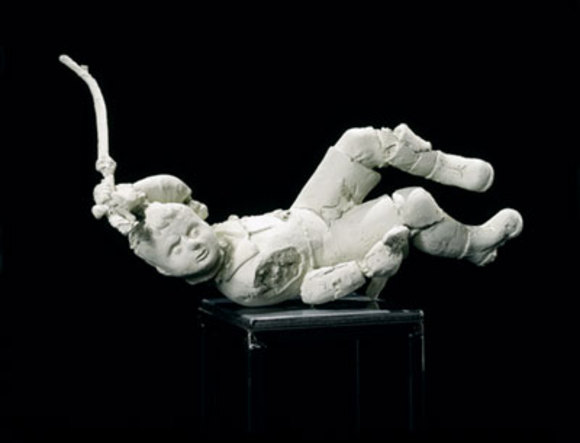
<p><span style="color: black;">&nbsp;&nbsp; &nbsp; &nbsp; &nbsp; Among David Chalmers many colorful maneuvers is his philosophizing about zombies, repeating the idea of the mechanical body of Descartes and Sanctorius, not to mention the spooky legend of Descartes's mechanical daughter. </span>There is a creepy, ghoulish vitality to Aries, in its affiliation with demons, zombies, automata, self-replicating DNA, selfish genes, ceaselessly activity and strife. It sometimes manifests in the separate&nbsp; career of severed body-parts<span style="color: black;">: <em>Van Gogh&rsquo;s</em></span><span style="color: black;"> ear (in the mail), <em>Gogol&rsquo;s </em></span><span style="color: black;">nose. <em>Charlie Chaplin&rsquo;s</em></span><span style="color: black;"> body (robbed from its grave), the memorial bust on Houdini&rsquo;s tomb (stolen).&nbsp; Pieces of the body of the outspoken 17th century Aries Spanish mystic,<em>&nbsp;Teresa of Avila</em></span><span style="color: black;">, spread throughout the catholic world immediately after her death and now reside in&nbsp; reliquaries all over Europe and South America. The skulls of both <em>Haydn</em></span><span style="color: black;"> and <em>Raphael</em></span><span style="color: black;"> were stolen and became peripatetic momenti mori. Philoprogenitive <em>J. S. Bach&rsquo;s</em></span><span style="color: black;"> skeleton disappeared. Madalyn Murray&nbsp;</span>O'Hair was dismembered, along with her son and granddaughter.</p>
<p><span style="color: black;">&nbsp;&nbsp;&nbsp;&nbsp;&nbsp;&nbsp;&nbsp;&nbsp; Christ&rsquo;s traditional birthdate coincides with pre-Christian winter solstice festivals; but some evidence (a well-worked out theory about the Star of Bethlehem being a close conjunction of Mars, Jupiter and Saturn that took place in April 3 BC) &nbsp;points to an Aries birthdate for Jesus Christ, whose resurrection (and missing body) is the ultimate great escape. Descartes himself was virtually canonized in the 18th century, a sort of rationalist saint, and, like Teresa's, his skeleton and skull were circulated, moved several times in Sweden shortly after his death there, divvied up and carted around northern Europe and France, ideologically freighted, and finally cherished as relics of the new religion of rationalism. (See <em>Descartes' Bones, </em></span><span style="color: black;">by Russell Shorto.) </span></p>
<p>&nbsp;</p>
<p><span style="color: black;">&nbsp;</span></p>
<p>&nbsp;</p>]]></content></entry></feed>