About Me


Callicoon Books                                                                                                                                        
25 Lower Main Street
                                                                                                                      Callicoon, NY 12760  
1 - 5  Sat & Sun

mshulgas@hughes.net
                                                                                                   www.amazon.com/shops                                                                                                                                 /wkkbooks


This site is a member of WebRing.
To browse visit Here.

This area does not yet contain any content.
Login
Subscribe

data  (pl.n.)  Factual information, information that has been organized for analysis or use, or translated into a form that is more convenient to move or process.

« Aries in red dress #17 | Main | Aries in red #15 »
Sunday
05Apr2009

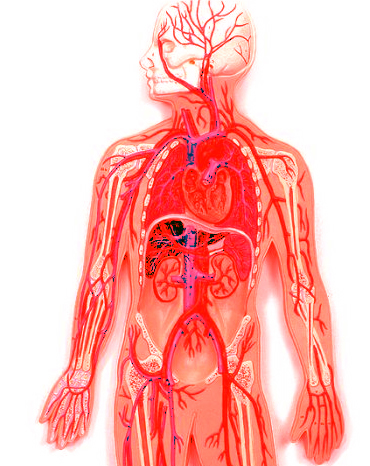
Blood-soaked, Aries #16


A few anecdotes about William Harvey (b. April 1, 1578) discoverer of the circulation of blood, from the Brief Lives of John Aubrey:

"When Charles I by reason of the tumults left London, [Harvey] attended him, and was at the fight of Edgehill with him; and during the fight, the Prince and Duke of York were committed to his care: he told me that he withdrew with them under a hedge, and took out of his pocket a book and read; but he had not read very long before a bullet of a great gun grazed on the ground near him, which made him remove his station. He told me that Sir Adrian Scrope was dangerously wounded there, and left for dead amongst the dead men, stript; which happened to be the saving of his life. It was cold, clear weather, and a frost that night; which staunched his bleeding, and about midnight, or some hours after his hurt, he awaked, and was fain to draw a dead body upon him for warmth sake.

“He was, as all the rest of the brothers, very cholerique; and in his young days wore a dagger (as the fashion then was, . . . ), but this Dr. would be too apt to draw out his dagger upon every slight occasion.

“He was far from bigotry.

“I have heard him say, that after his book of the Circulation of the Blood came-out, that he fell mightily in his practice, and that ’twas believed by the vulgar that he was crack-brained; and all the physicians were against his opinion, and envied him; many wrote against him, . . . . With much ado at last, in about 20 or 30 years time, it was received in all the Universities in the world; and, as Mr. Hobbes says in his book ‘De Corpore,’ he is the only man, perhaps, that ever lived to see his own doctrine established in his life time.

“He was physician, and a great favorite of the Lord High Marshall of England, Thomas Howard, earl of Arundel and Surrey, with whom he traveled as his physician in his ambassade to the Emperor . . . at Vienna, Anno Domini 163-. Mr. W[enceslaus]. Hollar (who was then one of his excellency’s gentlemen) told me that, in his voyage, he would still be making of excursions into the woods, making observations of strange trees, and plants, earths, etc., naturals, and sometimes like to be lost, so that my Lord Ambassador would be really angry with him, for there was not only danger of thieves, but also of wild beasts.

“He was much and often troubled with the gout, and his way of cure was thus; he would then sit with his legs bare, if it were frost, on the leads of Cockaine house, put them into a pail of water, till he was almost dead with cold, and betake himself to his stove, and so ’twas gone.

“He was hot-headed, and his thoughts working would many times keep him from sleeping; he told me that then his way was to rise out of his bed and walk about his chamber in his shirt till he was pretty cool, i.e. till he began to have a horror, and then return to bed, and sleep very comfortably.

“I remember he was wont to drink coffee; which he and his brother Eliab did, before Coffee-houses were in fashion in London.

“All his profession would allow him to be an excellent anatomist, but I never heard of any that admired his therapeutic way. I knew several practisers in London that would not have given 3d. for one of his bills; and that a man could hardly tell by one of his bills what he did aim at.
(i. e. illegible prescriptions!)

“It is now fit, and but just, that I should endeavor to undeceive the world in a scandal that I find strongly runs of him, which I have met amongst some learned young men: viz. that he made himself a way to put himself out of his pain, by opium; not but that, had he laboured under great pains, he had been ready enough to have done it; I do not deny that it was not according to his principles upon certain occasions  . . . . : but the manner of his dieing was really, and bonâ fide, thus, viz. the morning of his death about 10 a clock, he went to speak, and found he had the dead palsey in his tongue; then he saw what was to become of him, he knew there was then no hopes of his recovery, so presently sends for his young nephews to come-up to him, to whom he gives one his watch (’twas a minute watch with which he made his experiments); to another, another remembrance, etc.; made sign to . . . Sambroke, his apothecary (in Black-Fryars),
Matthew Barney (b. March 25, 1967)to let him blood in the tongue, which did little or no good; and so he ended his days. His practice was not very great towards his later end; he declined it, unless to a special friend,—e.g. my Lady Howland, who had a cancer in her breast, which he did cut off and seared, but at last she died of it."

The entire text of Aubrey's entry on William Harvey can be found here

Lon Chaney also died of a throat hemorrhage. This seems to be a characteristic Aries way of dying, in blood, on the battlefied, etc.

Two other Aries of note in the history of blood:

Joseph Lister (April 5, 1827) one of the greatest of 19th century surgeons, he performed thousands of amputations, and discovered antisepsis.

James B. Conant (March 26, 1893) a brilliant and creative polymath, president of Harvard University, began his professional life as a biochemist, and made significant contribution to the understanding of hemoglobin, and why blood is red.


PrintView Printer Friendly Version

EmailEmail Article to Friend

Reader Comments

There are no comments for this journal entry. To create a new comment, use the form below.

PostPost a New Comment

Enter your information below to add a new comment.

My response is on my own website »
Author Email (optional):
Author URL (optional):
Post:
 
All HTML will be escaped. Hyperlinks will be created for URLs automatically.