Happy Birthday Tim Berners-Lee; Gemini post-modern philosophers
 Sunday, June 8, 2008 at 01:27PM
 A birthday greeting to Sir Tim Berners-Lee, born 8 June 1955, creator of the blogosphere. Unavoidably, cyber-presence, the binary code, everything mediated, is owed to the Twins. Gemini, the Third sign, is preeminently the sign of communication of information. First is the dot, Second the dash, Third is the flash of the difference, the current that leaps from the negative to the positive, meaning constituted by the binary, the digital, the iterative, the multiplicative, the network the Web. (Later in the zodiac come the spiders.)
Naturally, Geminis have contributed significantly to post-modern communication concepts. The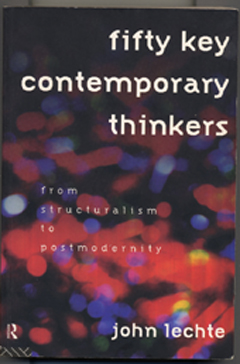 current privileging of the term “discourse” itself is introduced to contemporary discourse in the work of the French linguist Emile Benveniste (8 June 1902). Lechte, in the indispensible 50 Key Contemporary Thinkers (1994) writes: that "B. sees language as essentially a dialogue between two or more parties, unlike a signal system. . . . this means that human language has an undeniable poetic and fictive character to it."
The communications theorist Jurgen Habermas (18 June 1929), urges that dialogue itself “calls for participants to engage in interpretation at all levels, thus heightening the degree of each person’s self-understanding as this derives from his or her interaction with others.” We all have an “intersubjective recognition” of the validity of the other’s utterance. Habermas’s development of the idea of “intersubjectivity”as a counter to both solipsism and scientistic objectivity has been indispensable to recent thinking about identity. He stands on a high mountain range separating Modernism and Post-Modernism, fortifying the borders of the Enlightenment. He has confidence that the "reasonably human can prevail". In the title of his seminal work Knowledge and Human Interests (1968) a dichotomy is suggested and the word "interests" calls attention to itself with its implied betweenity. The question raised is how to balance the powerful weight, Knowledge: the scientific and technological exploitation of the globe, against the concerns of being human. Gemini is the associate of borders. Habermas wishes us to maintain the border, but to cross it freely. In fact, he says: "The borders of truth are movable."
"Interest" comes from the latin inter esse, to be between. This Gemini experience of being as a twoness, or a multiplicity, or a passage, and the associated curiousity of the child, restlessness of the adolescent, energy of the youth, this vivacity and wit to connect, is Gemini's continual gift to life.
No aspect of post-modern thought has a more urgent claim to examination fundamental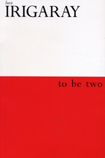 assumptions about communication than feminism, as it grapples with the psychosocial and historical irreducibility of gender binarism. French linguistic philosopher Luce Irigaray enriches the feminist debate with the experience of Gemini consciousness, beginning with her tour de force deconstruction of gender binaries in the 1974 Speculum of the Other Woman. [Note the mirror, the Geminian doubling]. Her 1994 book To Be Two, opens with a rhapsodic prologue in which she attempts to describe her awareness of her own birth process, including the moment of her acceptance of her astrological imprint:
 “You, my stars, masters of the universe, are my guardians and my peace, the font of my duties and of my fortunes. Bound to you in some mysterious way, I try to be faithful without understanding. I welcome your commands. Attentive, I am sometimes amazed, sometimes terrified, even though, in a certain sense, I put more faith in you than in myself. When decisions frighten me I search for a sign, not knowing if you are to guide me or if I am to guide you. I do not even know how to respect you in carrying out my own becoming.”
Another major figure of French post-structuralist feminism, the poet Helene Cixous (5 June 1937) obsessively explores the idea of a specifically female writing, to strip the mask of gender neutrality from communication itself. She too at one point reaches to stars:
 On another level entirely, the oeuvre of American sociolinguist Deborah Tannen (7 June 1945) reiterates the gendered dyadics of discourse: You Just Don't Understand: Women and Men in Conversation; Talking from 9 to 5: Women and Men at Work; That's Not What I Meant! How Conversational Style Makes or Breaks Relationships; Conversational Style: Analyzing Talk Among Friends; I Only Say This Because I Love You: Talking to Your Parents, Partner, Sibs, and Kids When You're All Adults; You're Wearing That?: Mothers and Daughters in Conversation.
The sociologist Erving Goffman (11 June 1922) is worth noting in this context, for titles like: Encounters: Two Studies in the Sociology of Interaction; Interaction Ritual: Essays on Face-to-Face Behavior; Strategic Interaction and Forms of Talk.
Finally, to link the post-modern back to the digital binarism of Berners-Lee, take the figure of the late Jean Baudrillard (20 June 1929, according to the London Times and numerous other sources, although Wikipedia has July 29. Baudrillard was evasive about his biography; like Irigaray, he prefered "to be without a background”.) Baudrillard noted that the reduction of information to digital binarism enables the proliferation of the perfect copy, and therefore a by-passing of the real, and into the experience of hyperreality (his coinage). Baudrillard’s nightmarish vision of the simulacrum (cf, the copy, the double, the twin) is in fact a version of Berners-Lee’s World Wide Web, in which the easily-accessed deliria of passive specularity, have, seemingly overnight, hollowed out the civitas, which now implodes under the vitality of a counterbalancing religious terrorism. This puts Baudrillard in the company of Gemini’s icy anarchic extremists: de Sade, Bakunin, Celine, the Unabomber, Drs. Kervorkian and Guillotin. Of the pitiless heart of dualism Baudrillard writes: “No one seems to have understood that Good and Evil advance together, as part of the same movement. The triumph of one does not eclipse the other—far from it. . . Good does not conquer evil, nor indeed does the reverse happen, they are at once both irreducible to each other and inextricably interrelated.” (The Spirit of Terrorism, 2002). As an addendum, a few more Baudrillard titles which make me think he's a Gemini, whatever Wikipedia says: The Mirror of Production, Symbolic Exchange and Death, The Evil Demon of Images, Simulacra and Simulation, The Twin Towers.
"Deep down, things have never functioned socially, but symbolically, magically, irrationally, etc." J. Baudrillard
astrology, baudrillard, benveniste, berners-lee, cixous, gemini, habermas, irigaray in Gemini Print Article 

Reader Comments